Exploring Carl Jung: Depth Psychology, Archetypes, and the Path to Wholeness
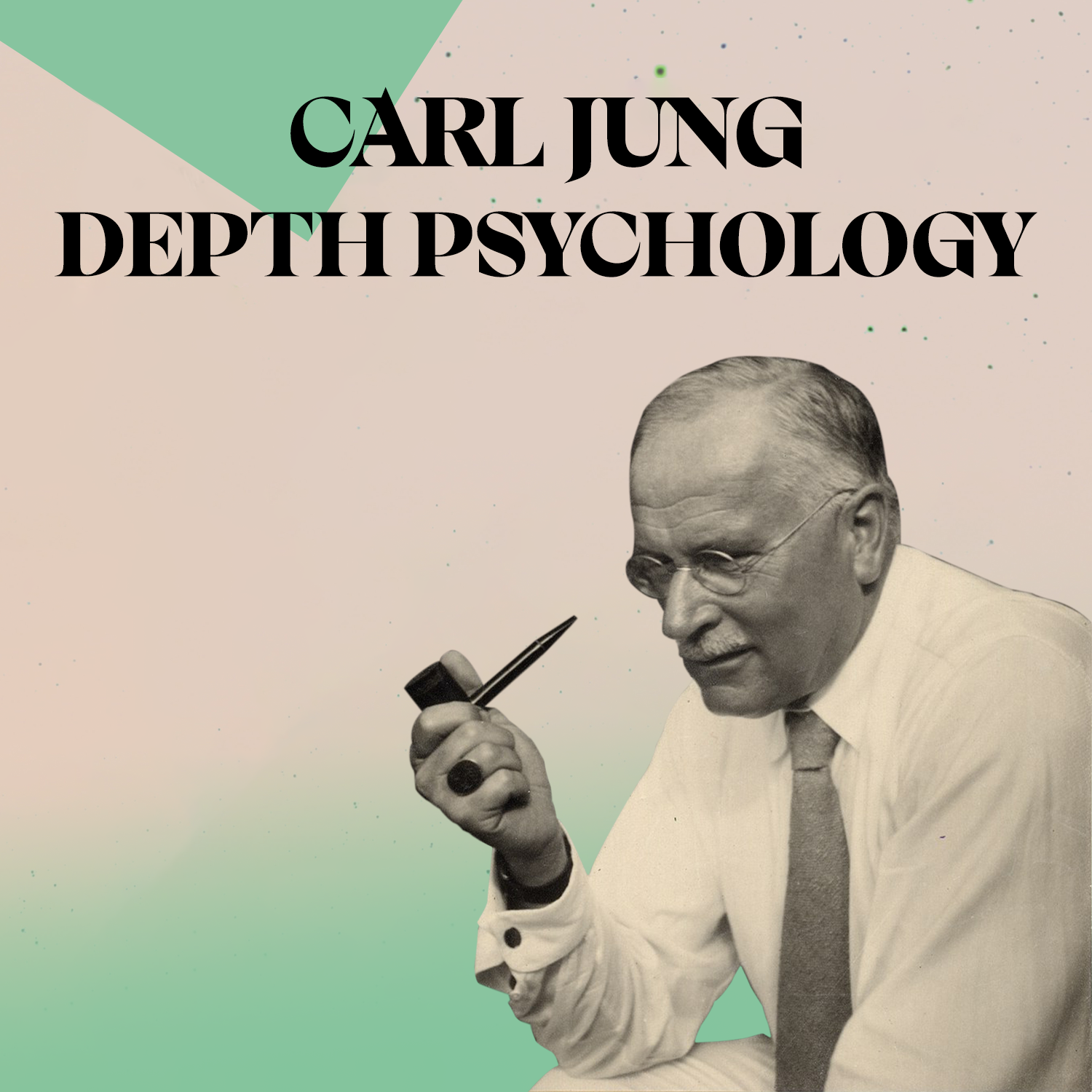
Photo: Unbekannt via Wikimedia commons, Public domain
Carl Jung was a Swiss psychiatrist, psychologist, anthropologist, and cultural theorist who lived from 1875 to 1961. He was one of the most influential figures in the field of psychology, renowned for his pioneering work in areas such as the collective unconscious, archetypes, and personality theory.
Jung was also known for his incredible visionary imagination and his contributions to fields beyond just psychology, such as anthropology and the study of culture.
In 1900, Jung completed his medical studies at the University of Basel. He then began psychiatric practice in various hospitals, including in Zurich and Paris, under the tutelage of Pierre Janet (1859-1947) - a prominent figure in the French school of psychopathology and a pioneer of psychoanalysis.
A particularly significant event in Carl Jung's biography was his meeting with Sigmund Freud, which occurred in 1907. The two began a collaborative relationship at that time. However, tensions soon arose between them regarding the interpretation of the role of sexuality and the meaning of religion.
In 1912, Jung published his groundbreaking book "Symbols of Transformation", which presented his own distinct vision of depth psychology, significantly differing from Freud's approach. This publication ultimately led to the dissolution of his partnership with Freud and Jung's embarking on an independent path of developing analytical psychology.
It's worth mentioning that Freud was a 19th century materialist. According to the renowned psychoanalyst and social theorist Erich Fromm, Freud was a rationalist at heart, motivated by a desire to subordinate the unconscious to reason and control it.
In contrast, Jung belonged to the romantic, anti-rationalist tradition, being suspicious of reason and intellect. For Jung, the unconscious, representing the irrational, was the deepest source of wisdom. Analytical therapy, in Jung's view, helps the patient connect with this source of irrational wisdom and benefit from it.
“Who looks outside, dreams; who looks inside, awakes.”
Carl Jung believed that true self-understanding and individuation can only be achieved by looking inward, rather than projecting our unconscious reality outward.
Jung saw this inward focus as a fundamental tenet of his analytical psychology. He felt that by examining our inner world - our dreams, archetypes, and unconscious processes - we can gain a deeper awareness of ourselves and our place in the world. In contrast, Jung believed that an outward orientation leads to a kind of waking dream state, where we fail to fully comprehend our own motivations and experiences.
Among Jung’s most important works are Psychological Types (1921), The Archetypes and the Collective Unconscious (1934–1954), Answer to Job (1952), and Memories, Dreams, Reflections (1962).
Carl Gustav Jung, the pioneer of analytical psychology, revolutionized our understanding of the human psyche. Drawing inspiration from Eastern mysticism, mythology, and the interpretation of dreams, Jung introduced many influential concepts that remain relevant today, including introversion, extroversion, and the collective unconscious.
1. Introduction to Depth Psychology
“Knowing your own darkness is the best method for dealing with the darknesses of other people.”
Jung sought to answer many profound questions, such as: Is our subconscious dangerous? Should it be controlled and subordinated to reason? He also tried to determine where the source of true human wisdom lies.
Carl Gustav Jung built upon Freud’s psychoanalytic theories but developed his own interpretation of the unconscious. He proposed that, at the deepest level, all humans share a collective unconscious, which is populated by archetypes, universal symbols, and patterns of behavior that transcend individual experience.
Jung’s approach to psychoanalysis gave rise to what is now known as depth psychology, a field that delves into the layers of the unconscious mind and seeks to understand its influence on human behavior and development.
Before describing depth psychology, it's worth mentioning that in his book "Psychological Types", Jung introduced the commonly accepted division of personality into extraverts and introverts. The former are people whose psychic life is directed "outward", towards the world, are socially oriented, and active. The latter represent an "inward" attitude, are introverted, restrained, and cautious in social interactions.
A Swiss psychologist also presented his own version of the unconscious. While maintaining Freud's topographical model of the mind, which divides it into consciousness, the preconscious, and the unconscious, Jung introduced the idea of the collective unconscious within the deepest layer.
Jung argued that the deepest layer of the psyche forms a common foundation of human experience, from which certain phenomena such as premonitions, prophetic dreams, and telepathic experiences can arise.
It’s also worth noting that, in contrast to Freud, Jung did not emphasize the central role of sexuality in the human psyche. Instead, he viewed unintegrated archetypal contents as a primary source of psychological disturbance. His therapeutic approach, therefore, focused on guiding the individual toward the realization and integration of these archetypal elements.
Jung further believed that the integration of conscious and unconscious aspects of the psyche, a process he called individuation, was the path toward psychological wholeness and self-actualization.
This perspective stood in contrast to Freud’s emphasis on symptom reduction and adaptation to social norms.
For Jung, the fundamental goal of human life was the pursuit of wholeness: the full realization and integration of both conscious potential and unconscious contents. This process may unfold through confrontation with the unconscious or through the search for meaning in what was previously misunderstood. In Jung’s view, human beings are inherently oriented toward development.
“Conscious and unconscious do not make a whole when one of them is suppressed and injured by the other. If they must contend, let it at least be a fair fight with equal rights on both sides. Both are aspects of life“
Becoming oneself is the result of integrating conflicting contents and archetypal processes from both the personal and the collective unconscious.
According to Jung, every individual is an intriguing mystery, and the task of the analyst is to set aside preconceived knowledge and observe with openness, directly encountering the uniqueness of each patient.
In discussing Jung’s depth psychology, it is also important to acknowledge the profound influence of Friedrich Nietzsche on his thinking. Nietzsche famously declared the “death of God,” arguing that scientific empiricism and rationalism had dismantled the mythological frameworks that once gave meaning and structure to Western culture.
This collapse left humanity without shared foundations, leading Nietzsche to call for the creation of autonomous values in response to the loss of religious and cultural absolutes.
Jung, inspired by Nietzsche’s critique of rationalism, shared a belief in the importance of irrational and symbolic forces in human life. Both thinkers regarded myth, fantasy, and the unconscious as essential sources of meaning.
However, while both Jung and Freud emphasized the exploration of unconscious fantasies, their approaches differed significantly. Freud viewed unconscious fantasies primarily through a personal lens, using methods such as free association to uncover repressed desires and individual psychological conflicts. Within his materialistic framework, these fantasies were closely tied to personal development and early trauma.
Jung, by contrast, extended the exploration of unconscious fantasies beyond the personal dimension. He connected spontaneous fantasies and dreams not only to the individual psyche but also to archetypes and mythological patterns that recur across cultures and history. For him, these fantasies were not merely echoes of personal experience but gateways to a shared symbolic realm that shapes human life across time.
By engaging with the unconscious through dreams and fantasies, Jung believed that individuals could uncover deeper and more universal patterns of meaning. These archetypal insights not only support personal development but also connect individuals to a shared human heritage, offering a sense of purpose and psychological wholeness in an increasingly fragmented world.
Jung’s search for wisdom in irrational patterns, such as dreams and visionary experiences, led him to emphasize the transcendent as a central force in human behavior and personality development.
At a time when nineteenth-century thought was largely shaped by materialism, Jung’s research extended beyond the boundaries of European culture. He observed, among other things, that dreams often contained insights into the sources of emotional unrest and inner disharmony.
Jung’s depth psychology offers a profound exploration of the human psyche, illuminating the dynamic relationship between conscious and unconscious processes. Through practices such as introspection and dream analysis, individuals can uncover hidden patterns that shape their thoughts and emotions. This integrative process, known as individuation, fosters psychological growth and provides a framework for understanding human development that transcends cultural and historical boundaries.
2. Archetypes and Symbols
At the heart of Jung’s depth psychology lies the concept of archetypes—universal, primordial images and patterns embedded deep within the human unconscious. These archetypes are not mere personal experiences or memories, but rather symbols shared across cultures and generations, shaping our perceptions, behaviors, and dreams.
It’s worth adding that archetypes are not static images, but dynamic patterns of psychic energy that can manifest in different ways depending on cultural and personal context.
“The archetypes are, so to speak, organs of the pre-rational psyche. They are eternally inherited forms and ideas which have at first no specific content. Their specific content only appears in the course of the individual’s life, when personal experience is taken up in precisely these forms.”
Archetypes are not tied to specific content, but rather serve as potential forms into which personal experiences can be projected throughout life. These patterns appear in a variety of forms, such as myths, dreams, and cultural symbols, allowing individuals to make sense of their inner worlds. Archetypes are dynamic; they adapt and acquire specific meanings depending on the individual's personal journey, yet their core structure remains unchanged.
To understand the origins of archetypes, it's worth noting a pivotal moment in 1909 when Freud published his work on obsessional neurosis. Jung disagreed with Freud's fundamental thesis that repressed sexual trauma lies at the root of neuroses. Instead, Jung argued that obsessional neurosis cannot be fully understood without considering mythology and cultural history.
While Freud emphasized individual trauma, Jung recognized that psychological experiences were connected to broader patterns of human experience.
In the context of archetypes and symbols, we can also observe that humans create their own reality by expressing latent psychic energy through images and words, drawing from a deeper, collective prehistory beyond the individual self.
This understanding reveals how our psychological experiences are simultaneously personal and universal, rooted in both individual consciousness and the vast repository of human cultural memory.
“An archetype is like an old watercourse along which the water of life has flowed for centuries, digging a deep channel for itself. The longer it has flowed in this channel the more likely it is that sooner or later the water will return to its old bed.“
Jung emphasized that archetypes are not directly observable. We can never see them as they are in themselves; we only infer their presence from recurring symbols, images, and narratives that appear in dreams, myths, and works of art. Archetypes are not fixed entities but living forces that shape consciousness from below, which makes them inherently difficult to define. Jung himself admitted that their nature was elusive. Sometimes he described them as a small, fixed number, while at other times he suggested they might be infinite. This ambiguity reflects the different levels at which archetypes operate: the more transcendent and universal an archetype is, the fewer there are, but as they manifest in human life, they branch endlessly into diverse forms.
The archetype of the Hero, for instance, may appear as Odysseus, King Arthur, or any figure who faces chaos, overcomes trials, and undergoes transformation. Though the details vary, each story expresses the same deep pattern of struggle and renewal, a structure that belongs to the collective imagination rather than any one culture.
Jung compared archetypes to organs of the psyche, dynamic, instinctual complexes that shape human experience at a fundamental level.
“Just as the organs of the body are not mere lumps of indifferent, passive matter, but dynamic, functional complexes which assert themselves with imperious urgency, so also the archetypes, as organs of the psyche, are dynamic, instinctual complexes which determine psychic life to an extraordinary degree.”
Archetypes are not abstract ideas but living systems of meaning that guide our emotions, behaviors, and creative impulses.
Although Jung recognized that the number of archetypes may be infinite, he identified several that recur most often: the Persona, the Shadow, the Anima and Animus, and the Self. Each represents a key aspect of psychic life, such as the social mask we present, the hidden parts of ourselves we repress, the inner image of the opposite gender, and the totality of the psyche striving for unity. Around these core archetypes, many others like the Mother, the Wise Old Man, the Child, and the Trickster appear and disappear, expressing the shared symbolic language of humanity.
Archetypes communicate through symbols, the natural language of the unconscious. A symbol is not just a metaphor or sign. It’s a living image that connects the conscious and unconscious, giving form to what cannot be expressed in words. Through symbols, archetypes appear in dreams, myths, and creative acts. They express the flow of psychic energy and guide individuals toward self-understanding and transformation. Jung considered this process essential to individuation, the realization of the Self through the integration of unconscious contents.
3. Dreams
“The dream is the small hidden door in the deepest and most intimate sanctum of the soul, which opens to that primeval cosmic night that was soul long before there was conscious ego and will be soul far beyond what a conscious ego could ever reach.”
Throughout history, dreams have held a mysterious place in human life, blurring the line between waking and sleeping and offering glimpses into what lies hidden within us.
For Jung, dreams were not meaningless or random. They were living symbols, spontaneous self-portraits of the unconscious, revealing what the conscious mind ignores or represses. While humanity has often seen dreams as messages from gods, glimpses into the soul, or random byproducts of the mind, Jung saw them differently: they were the psyche’s own way of communicating with itself.
In Jung’s view, dreams perform a compensatory function. They reveal what has been neglected or denied by the conscious mind, helping to restore psychological equilibrium. The unconscious stores everything that has been ignored or repressed, and through dreams, it brings this forgotten material back into awareness.
According to Jung, dreams often work through opposites. If someone is overly rational and controlled, they may dream of chaos or strong emotions. If a person holds an inflated view of themselves, they may dream of weakness or failure. In this way, dreams restore inner balance and reveal what the conscious mind has ignored.
This idea contrasts with Freud’s theory of dreams. For Freud, dreams conceal, but for Jung, they reveal. Freud believed that dreams disguise forbidden desires, often sexual in nature, to prevent the dreamer from waking. In his view, dreams protect sleep by transforming repressed wishes into symbolic imagery.
Jung, on the other hand, saw them as transparent communications from the unconscious, not puzzles to be decoded but messages to be understood. They do not hide meaning behind symbols; they speak through them.
For Jung, the starting point of dream interpretation is the ego, the conscious "I" that receives and interprets messages from the unconscious. Dreams invite the ego into a dialogue with deeper layers of the psyche, revealing aspects of personality that remain unseen in waking life. By reflecting on these images, the individual can integrate what was previously unconscious, achieving greater balance and self-awareness.
This process is central to Jung’s concept of individuation, the gradual integration of conscious and unconscious into a unified whole.
Jung also rejected rigid or universal interpretations of dream symbols. Instead, he proposed amplification, an approach that expands the dream’s imagery by connecting it with myth, art, and cultural symbolism. A dream about water, for example, cannot be reduced to a single meaning. Its significance must be explored in relation to the dreamer’s life, emotions, and humanity’s broader symbolic heritage. Through this method, dreams become part of a universal language of the psyche, bridging personal experience with the collective unconscious.
“A dream that is not understood remains a mere occurrence; understood it becomes a living experience.“
In this sense, dreams are not mere fragments of sleep but living expressions of the soul. They remind us that beneath the surface of everyday awareness lies a vast inner world, one that speaks to us each night, not to be solved but to be understood.
4. The Language of the Unconscious
“The less we understand of what our fathers and forefathers sought, the less we understand ourselves, and thus we help with all our might to rob the individual of his roots and his guiding instincts, so that he becomes a particle in the mass, ruled only by what Nietzsche called the spirit of gravity.”
Previously, we mentioned that dreams communicate through symbols that the conscious ego must engage with to recognize their meaning. More broadly, the unconscious speaks through myths, archetypes, and cultural images. In both dreams and symbols, the same principle is at work: the psyche expresses what cannot be spoken directly. Engaging with this symbolic language allows the individual to reconnect with deeper psychic roots and bring hidden aspects of the self into awareness.
In Jungian psychology, it is important to distinguish between signs and symbols. A sign has a fixed and conventional meaning. It always points to something specific and known. A symbol, on the other hand, points beyond itself. It carries layers of meaning that cannot be fully expressed in words. Symbols connect the conscious and unconscious mind, allowing the psyche to communicate its hidden contents. For Jung, symbols are the natural language of the psyche. They are living realities that grow, change, and reveal new meanings over time.
For example, a stop sign or a mathematical symbol has only one clear meaning that everyone agrees on. But a symbol like water can mean many things: emotion, purification, or the depths of the unconscious. A snake might represent danger, transformation, or healing. The sun can symbolize life, energy, or divine power. These meanings shift depending on the person, their experiences, and the culture they belong to. That is what makes symbols alive. They evolve and reveal new layers of meaning as our understanding deepens.
In modern culture, we often reduce symbols to mere signs. We interpret them only at the surface and lose touch with their deeper meaning. This rational approach weakens our symbolic imagination and cuts us off from the unconscious, leaving us spiritually impoverished. For Jung, this loss of symbolic awareness is one of the key problems of the modern world. Without symbols, we lose our living connection to inner life and to humanity’s heritage, which stretches back through myth and religion.
The unconscious does not communicate through logic or reason. It speaks in images, feelings, and patterns. Myths, dreams, and creative expressions all emerge from this symbolic source. To understand them, we must think symbolically, not literally. When we approach symbols with openness instead of analysis, they reveal something beyond what the intellect alone can grasp. This symbolic understanding reconnects individuals with meaning and the timeless patterns of the collective unconscious.
Within this symbolic field, complexes also arise. These are clusters of emotion and meaning that influence how we think, feel, and act. A complex forms when experiences or emotions are too intense or painful to be fully integrated by consciousness. These experiences gather around an archetypal core and continue to live in the unconscious, shaping perception and behavior from behind the scenes. Examples include the mother complex, the power complex, or the inferiority complex, each representing a dynamic constellation of feelings and memories organized around a symbolic theme.
5. Realizing Human Potential
Carl Gustav Jung believed that every human being carries a potential future self, an image of what they could become if they fully developed and lived in harmony with their inner truth. This potential is not distant or abstract. It appears in everyday life through the things that capture our curiosity, inspire us, and give us a quiet sense of meaning. According to Jung, these interests are not random. They are signals from the unconscious, subtle clues guiding us toward our own realization.
Following what genuinely fascinates us is not self-indulgent. It is a response to an inner calling. Jung saw this movement toward authenticity as part of the process of individuation, through which the conscious and unconscious come into dialogue. Each time we act according to what feels meaningful, we take a step toward becoming whole. Ignoring that call pulls us further from ourselves.
A similar theme appears in mythology. Joseph Campbell, American writer, born in 1904, building on Jung’s ideas, described the hero’s journey as a pattern of transformation, in which an individual receives a call to adventure, an invitation to leave comfort, face the unknown, and grow. Jung saw this mythic structure as reflecting an inner psychological process. The unconscious continually calls the ego to expand, to move beyond what is familiar, and to integrate what has been rejected or forgotten. The path toward human potential always begins with that call.
Jung’s vision of development can be compared with Friedrich Nietzsche’s philosophy of self-overcoming. Both thinkers emphasized transformation and authenticity. For Nietzsche, realizing one’s potential means transcending limitations and creating one’s own values. For Jung, it involves uniting the divided parts of the psyche into a harmonious whole. Nietzsche emphasized power and transcendence, while Jung emphasized meaning and integration. Yet both agreed that becoming oneself requires courage to face inner conflict, endure uncertainty, and keep moving forward despite failure.
Jung described the journey toward the Self with the term circumambulation, a continual circling around the center of one’s being. Life is rarely linear. We revisit the same patterns, desires, and fears many times, each time seeing them differently. This repetition is not failure but movement. With each cycle, we circle closer to the center of who we truly are.
“I began to understand that the goal of psychic development is the self. There is no linear evolution; there is only a circumambulation of the self. Uniform development exists, at most, at the beginning; later, everything points toward the centre. This insight gave me stability, and gradually my inner peace returned.”
In this process, mistakes are inevitable and necessary. Symbolically, the fool must come before the savior. One must be willing to be a fool, to try, to fail, and to learn before any mastery is possible. Jung believed that growth always involves risk, because learning something new requires letting go of something old. Each time we learn, we also unlearn. What we leave behind may once have been useful, which is why loss can feel painful. But staying with the familiar prevents transformation. True growth demands movement, even when it feels uncertain or chaotic.
The path toward the Self is marked by periods of collapse and renewal. Progress is not a steady climb but a series of advances and regressions. When the ego encounters something larger than itself, such as an experience of the unconscious, a crisis, or a dream, it may temporarily lose its stability. Yet these disruptions are not signs of failure; they are the psyche’s way of reorganizing itself at a deeper level. Understanding this helps us navigate the difficulties of transformation without despair.
Jung also believed that we must consciously choose an ideal to move toward, even if it is imperfect. The point is not to define perfection but to orient ourselves toward meaning. We must posit an ideal and strive toward it, knowing we will inevitably fall short. What matters is not the accuracy of the ideal but the act of striving itself. In short, movement, not perfection, brings transformation.
Realizing one’s potential, then, is not about becoming flawless. It’s about becoming whole. It means embracing the complexity of human nature, acknowledging both strength and weakness, and staying honest with oneself. It means living in dialogue with the unconscious, allowing its symbols, dreams, and intuitions to guide conscious life. Through this ongoing process of integration, the individual becomes more real, more alive, and more connected to the totality of the psyche.
For Jung, the ultimate goal of psychological development was not conventional happiness, but meaning. When a person follows the path of individuation, they align with something greater than the ego. Life acquires depth, coherence, and purpose. To realize human potential is to answer the call of the Self, the quiet voice within that leads us, through struggle and discovery, toward the wholeness of our being.
Summary
Carl Gustav Jung stands out as one of the most intriguing figures in psychoanalysis and the founder of what he called depth psychology. He believed the human psyche is made up of many layers, far more complex than Freud had imagined. Through his study of dreams, myths, and symbols, Jung discovered that deep within each person lies the collective unconscious, a shared psychological foundation containing archetypes, timeless patterns of behavior and imagination that have existed since the dawn of humanity.
These archetypes express universal human experiences such as love, death, birth, transformation, and suffering, and shape how we perceive and interpret the world. They form the hidden architecture of the psyche, influencing our emotions, relationships, and creative impulses in ways we often do not realize.
For Jung, understanding these patterns was essential to achieving psychological wholeness. By recognizing and integrating the unconscious aspects of ourselves, we move toward what he called individuation: the realization of the Self, where consciousness and the unconscious come into harmony.
In this sense, Jung’s psychology is both scientific and spiritual. It reminds us that to truly understand ourselves, we must also look beyond ourselves, into the vast symbolic world that connects all human beings across time and culture.
“There is only one way and that is your way; there is only one salvation and that is your salvation. Hence look into yourself. Do not compare, do not measure. No other way is like yours.”
According to Jung, every individual must walk their own path toward meaning and self-realization. Seeking external validation or following the paths of others leads us away from our true potential. Growth requires solitude, courage, and a willingness to face what is unique and often uncomfortable within oneself. Jung believed that if we ignore this inner calling, parts of our potential remain “unlived,” and this neglected life continues to haunt us. To live fully means bringing these hidden possibilities into reality, to fulfill what is within us before time runs out.
If you found this article intriguing or are interested in collaborating, feel free to connect with me on Twitter or visit my personal website.