Jim Simons: Patterns, Patience, and the Art of Not Following the Crowd
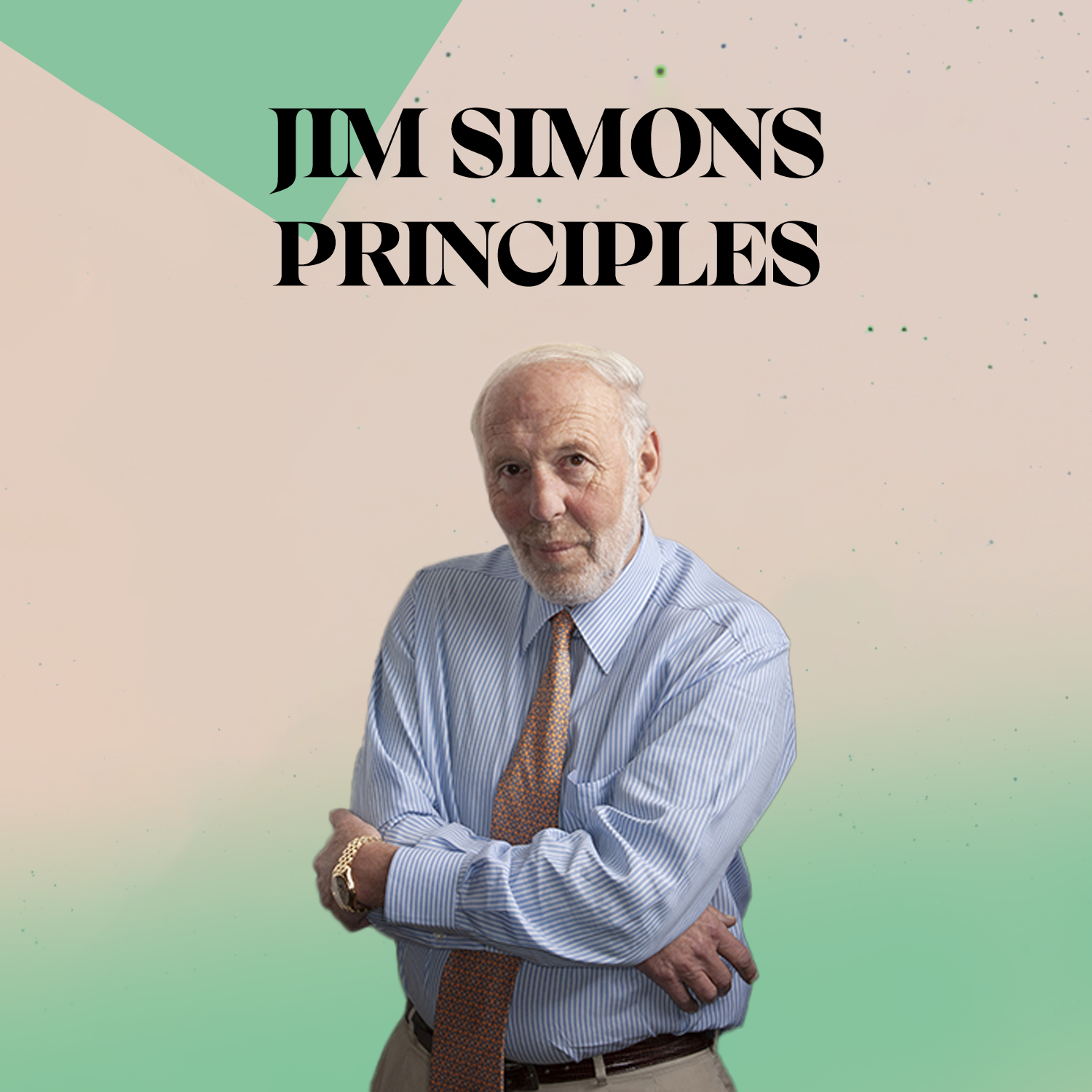
Jim Simons was a brilliant mathematician and investor who passed away at the age of 86, leaving an indelible mark on the world of finance. After a distinguished academic career, he entered the world of investing in his forties and transformed it forever.
What set Simons apart was his focus on patterns hidden in data rather than intuition or traditional market analysis. He believed that markets, however chaotic they might appear, were not random. With the right tools, sufficient data, and an openness to unconventional thinking, their underlying structure could be revealed.
This approach earned him the title “King of Quants”, a man who proved that numbers, when read with imagination, could uncover order within apparent unpredictability.
But “King of Quants” was more than a mathematician who mastered financial markets. He was a thinker who found beauty in complexity and coherence in systems others dismissed as noise. Success, he demonstrated, is rarely about following established paths. It emerges from the ability to connect ideas that seem unrelated and to see structure where others see confusion.
He lived by the principle of “don’t follow the crowd,” which was not merely an investment strategy but a philosophy of life. By combining mathematics, linguistics, physics, and logic, Simons created a new way of understanding reality, one in which patterns reveal truth and curiosity drives progress.
Simons embodied the idea that growth begins where imitation ends. True progress arises at intersections, through unlikely combinations of disciplines, passions, and perspectives. He showed that Interdisciplinarity is not chaos, but a higher form of order, and that the beauty of thinking differently may be the most valuable form of capital we will ever possess.
“You have to be willing to question conventional wisdom and think for yourself.”
Long before the world called him the “King of Quants,” Simons was searching for patterns not only in data but in life itself. Behind every equation, he sought elegance. Behind every idea, he looked for coherence. What guided him was not logic alone, but a deep sensitivity to beauty and the belief that truth often reveals itself where rigor and imagination meet.
1) The Power of Beauty
“Be guided by beauty. I really mean that. Pretty much everything I’ve done has had an aesthetic component, at least to me. Now you might think ‘well, building a company that’s trading bonds, what’s so aesthetic about that?’ But, what’s aesthetic about it is doing it right. Getting the right kind of people, and approaching the problem, and doing it right […] it’s a beautiful thing to do something right.“
Jim Simons often spoke about beauty with the same seriousness that others reserve for profit, efficiency, or strategy. For him, aesthetics were not an abstract ideal or a decorative layer added after success. Beauty was a guiding principle, a way of judging whether something truly worked.
If an idea was clumsy, inelegant, or forced, it was likely wrong. If it was simple, coherent, and internally consistent, it was worth pursuing.
In 1982, Simons founded Renaissance Technologies, a hedge fund that would eventually become one of the most successful investment companies in history. Today, Renaissance Technologies (RenTech) manages over 100 billion dollars in assets, and its employee-only Medallion Fund has achieved returns that defy conventional expectations, averaging over 60 percent annually since it began trading in 1988.
These results were not driven by intuition, storytelling, or market sentiment, but by mathematical models, pattern recognition, and relentless empirical testing. Staying true to its nature, Renaissance protects its strategies, seeing them as refined intellectual creations rather than mere market tricks.
“Be guided by beauty. Just as a great theorem can be very beautiful, a company that’s really working very well, very efficiently, that can be beautiful.”
For Simons, beauty was not a luxury but a discipline. He approached problems the way an artist approaches form, or a philosopher searches for clarity. Whether he was designing a trading algorithm or building an organization, he valued the elegance of a well-structured idea over the noise of speed, scale, or convention.
In mathematics, beauty and truth are inseparable. A beautiful proof does not persuade by force, but by necessity. Each step follows naturally from the last, without excess, ornament, or distraction. This aesthetic of correctness shaped how Simons thought not only about mathematics but also about finance and institutions.
In Simons’ world, doing something right meant doing it beautifully. The mathematics that shaped his early career was not merely about solving equations, but about uncovering symmetry and reducing complexity to its purest essence.
It is worth noting that the core culture of Renaissance Technologies was not simply a machine for generating profit, but a carefully constructed system designed to operate with precision, discipline, and internal harmony. In this sense, the firm became his most complex equation brought to life.
Where most saw markets as chaos, Simons saw design or beautifully crafted form. Where others chased short-term profits, he sought enduring structure.
Beauty, for the American hedge fund manager, was not opposed to practicality. It was the highest form of it. When logic and imagination aligned, when systems worked not by force but by design, the result was not only effectiveness, but elegance. That, for Jim Simons, was mastery.
2) Five Guiding Principles
Jim Simons was not only a brilliant mathematician and investor, but also a visionary who could translate the abstract elegance of mathematics into concrete, world-changing action. In 2010, when he stepped down from active management at Renaissance Technologies to fully devote himself to his foundation, he faced a new challenge: how to use vast resources effectively to drive progress in science.
Simons’ approach was never a matter of chance. True to his scientific heritage, he applied a proven methodology based on fundamental principles, which he himself called the five guiding principles. He shared them publicly for the first time during a lecture at MIT, inspired by his wife Marilyn.
As Simons himself admits, these principles were useful throughout his life and across his careers. The plural is deliberate, because few people can claim success in pure mathematics, quantitative trading, and scientific philanthropy all at once.
“These are principles, which even without articulating them to myself, I have followed“
What is particularly striking about Simons’ approach is that these principles are not abstract maxims meant to be framed on a wall. They are practical tools that he applied consistently in every major decision, from building Renaissance Technologies to guiding the Simons Foundation.
These five simple yet profound principles became the DNA of his approach to life, finance, mathematics, and philanthropy. They guided the way he built Renaissance Technologies, organized scientific research through the Simons Foundation, and made decisions that changed the world.
1) Do Something New; Don't Run With the Pack
“I am not such a fast runner. If I am one of N people all working on the same problem, there is very little chance I will win. If I can think of a new problem in a new area, that will give me a chance.”
Simons believed that real breakthroughs come from originality. Instead of competing where everyone else was already focused, he deliberately looked for new problems and unexplored areas. This approach worked both in mathematics and in finance. His success with quantitative models and data-driven investing was possible precisely because he avoided conventional paths and standard thinking.
2) Surround Yourself with the Smartest People
"I only hire people who had no contact with Wall Street, people who did research in hard science way beyond their PhD. With these people, I can understand their motivations, satisfy them, and retain them. People with finance or business education, I just don't understand them, they can betray me in a way I won't anticipate."
According to Simons, excellence required exceptional people. At Renaissance Technologies, he created teams of scientists and researchers, giving them the freedom to work independently. Each expert had a clearly defined role, and human interference was minimized. The principle of never overwriting a computer ensured that the results were statistically reliable and free from emotional or intuitive biases.
3) Be Guided by Beauty
"Be guided by beauty. Just as a great theorem can be very beautiful, a company that’s really working very well, very efficiently, that can be beautiful."
As we mentioned earlier, for Simons, aesthetics was a discipline, not a luxury. In mathematics, finance, and organizational design, elegant solutions mattered. A well-structured model, a clear system, and a coherent organization were not only pleasing but effective. At Renaissance, both the algorithms and the workplace culture reflected this pursuit of simplicity and balance.
4) Don't Give Up Easily
"Some things take much longer than one initially expects. If the goal is worth achieving, just stick with it."
Persistence was central to Simons’ success. He understood that scientific research and long-term investing demand patience, and that meaningful results take time. The Simons Foundation and the Flatiron Institute are clear examples of this long-term commitment.
5) Hope for Good Luck
"The final principle is hope for good luck. That’s the most important principle."
Simons was realistic about uncertainty. He knew that not everything could be predicted or controlled. Personal tragedies and life experiences taught him humility in the face of chance. Luck, combined with preparation and common sense, played a significant role in both his life and his success.
Simons’ five guiding principles were not abstract ideals. They formed a practical compass that shaped his decisions in mathematics, quantitative trading, and scientific philanthropy. Original thinking, surrounding oneself with exceptional people, valuing beauty, persistence, and acknowledging the role of luck together created a disciplined and effective way of operating at the highest level.
3) Don’t Follow the Crowd
“Our trading models actually tend to be contrarian, buying stocks recently out of favor and selling those recently in favor.”
Jim Simons’ career is a testament to the power of not following the crowd. When he was dismissed from a prestigious academic position at Stony Brook, many would have seen it as a professional catastrophe.
Simons, however, treated it as a signal to create something of his own, and thus Renaissance Technologies was born. Rather than returning to academia or trying to "save face" in established circles, he hired physicists, mathematicians, and coders, people with zero experience in finance, to build a fund based entirely on mathematical models.
This decision was a pure act of cognitive courage: rejecting conventional paths and constructing a world on his own terms.
The models they developed were not magic formulas; they were systems built from countless small insights. As Simons explained:
“Well, what’s the secret? There are a lot of little secrets because the way this world works, you have a lot of smart people and they keep inching away, getting new ideas here and there. You pile them together and soon you have an awful lot of small ideas that are independent of each other, and you can make some progress.”
These models reflected Simons’ belief in the power of aggregation: small, independently derived truths can combine to produce something much larger than their sum.
This mindset also shaped how Simons approached failure. By refusing to follow the crowd, one exposes oneself to rejection, skepticism, and apparent setbacks. Yet for Simons, failures were not personal defeats; they were data points. We might call this an approach of "emotional probability," viewing each misstep as part of a broader pattern leading toward success. Just as a model requires iterations and refinements, life requires experimentation, risk, and the courage to pursue paths others might dismiss.
Simons' ability to cross disciplines, from mathematics to cryptography, from finance to philanthropy, illustrates how cultivating diverse interests can fuel creative insight. He applied the same principle at Renaissance: hire the smartest people, give them freedom, and let the best idea win, regardless of who proposed it. The ego had no place in a system designed to discover truth. This approach shows that real progress often comes when we allow the strongest ideas, rather than status or tradition, to lead the way.
Simons also recognized the role of chance. Life can be unpredictable: he himself narrowly survived a trip in Colombia shortly after graduating from MIT, yet tragically lost two of his children later in life. Luck, he believed, is a principle to be acknowledged and prepared for, but never a substitute for discipline, insight, or courage.
Ultimately, Simons’ contrarian mindset extended far beyond finance. In academia, in philanthropy, and in life, he consistently questioned accepted wisdom and refused to follow established paths simply because they were familiar. For him, independence of thought was not a personality trait, but a discipline.
Simons understood that choosing an unconventional path often brings rejection, misunderstanding, and periods that look like failure from the outside. But he rejected the very idea of rejection. If a system did not reward what he was building, he did not try to force acceptance. He changed the system. Instead of returning to what felt safe or familiar, he created something entirely new.
His life suggests a simple but demanding lesson. Breakthroughs rarely come from refining what already exists. They come from asking different questions and having the courage to persist when results are unclear. When the world seems to push back, it may not be a signal to retreat, but an invitation to redefine the rules and design your own algorithm for success.
4) The Mathematics of Uncertainty
“Don’t rely on luck alone. Develop a systematic approach that accounts for uncertainty and seeks to capitalize on opportunities.“
Jim Simons thrived in uncertainty. He transformed the apparent chaos of markets into recognizable patterns while embracing the unpredictable nature of human potential. For him, growth was never a straight line. It was a constant exploration of possibilities, updating beliefs, testing assumptions, and finding order where others saw only randomness.
Simons embodied the paradox of finding order in uncertainty. He mastered financial markets not by knowing them in advance, but by seeing structures others overlooked. At the same time, he recognized that human potential is inherently unpredictable. His life demonstrated that growth is not linear, but a complex system where each new experience alters the path ahead.
“The King of Quant“ revolutionized investing by rejecting conventional expertise. Instead of hiring traditional financiers, he built teams of physicists, computer scientists, linguists, AI specialists, and cosmologists. These were people who did not know trading but understood patterns, data, and complex systems. By assembling such a team, he avoided tunnel vision and gained the ability to observe markets with fresh, objective eyes.
The American hedge fund manager understood that even the strongest beliefs are only approximations of reality. Much like the algorithms his fund employed, his understanding was constantly updated as new data emerged. Rather than pursuing a fixed ideal of perfection, he cultivated a flexible, interconnected approach in which diverse perspectives collided, generating insights that narrow thinking could never reveal.
By combining fields others kept separate, Simons created unique advantages and discovered patterns invisible to most. In his view, growth and innovation emerged from these intersections, from deliberately stepping outside familiar territories and connecting disciplines, perspectives, and ideas that seemed unrelated.
From this perspective, personal and intellectual growth is less about climbing a ladder of success and more about exploring a multidimensional space of possibilities. Each step into the unknown expands what can be seen, understood, and achieved.
5) Looking For Patterns
“So, when I was little, I liked math in the sense that I liked to, when I was three or four, or something like that, I liked to double the numbers to 2, 4, 8, 16, 32, etc.“
Jim Simons’ fascination with patterns predated his involvement in finance, academia, and hedge funds. As a child, he was already drawn to repetition, structure, and numerical progression. What looked like simple play was, in fact, early pattern recognition. Simons sensed that order hides beneath randomness, and that instinct never left him. It just evolved.
It’s worth mentioning that when most investors relied on intuition, stories, and market sentiment, Simons approached markets as another pattern recognition problem. To him, price movements were not narratives to be interpreted, but signals to be measured. Human intuition, shaped by emotion and bias, was unreliable. Data, observed over long periods and analyzed systematically, was not.
Markets, like encrypted messages, appeared chaotic only on the surface. Beneath that noise, Simons assumed, recurring structures had to exist. The task was not to predict outcomes with certainty, but to identify probabilistic patterns that repeated often enough to be useful. And this way of thinking changed everything.
“There’s a pattern here. There has to be a pattern.“
Instead of asking what the market meant, Simons asked what it did. Instead of trusting judgment, he trusted evidence. Renaissance Technologies was built around the belief that patterns invisible to the human eye could be detected by models trained on massive amounts of data. Advanced statistics and adaptive statistical models were adopted not because they were fashionable, but because they extended human perception beyond its natural limits.
Importantly, Simons did not believe in single, decisive insights. He understood that markets rarely reveal themselves through clear signals. His models were built from countless small ideas layered together. Signals that were weak or meaningless on their own became powerful only when combined.
The same logic shaped how Simons built organizations. He deliberately avoided financial insiders and hired outsiders trained to think in systems rather than stories. Physicists, mathematicians, linguists, and computer scientists were not chosen for their market opinions, but for their ability to detect structure in complexity.
This pattern-based thinking extended beyond markets. Simons treated failures the same way he treated losing trades. Not as personal defeats, but as data. Information to be analyzed, filtered, and learned from. When something did not work, it was not a verdict. It was feedback.
Looking for patterns, then, is not limited to a specific domain. It is a way of engaging with reality itself. Observing what repeats. Noticing what consistently works and what quietly fails. Growth begins when interpretation gives way to analysis, and curiosity replaces certainty.
Pattern recognition was not merely a professional skill for Jim Simons. It was a philosophy. A commitment to curiosity over certainty, systems over stories, and learning over ego. And perhaps that is the deepest pattern of all.
Summary
Jim Simons discovered that success is not a one-time formula but a self-learning system. Like his mathematical models, personal growth requires both knowledge and the courage to abandon old patterns when reality presents a better approach.
From his childhood fascination with doubling numbers to cracking Soviet codes for the NSA and later building Renaissance Technologies, Simons has consistently sought order in what appears to be chaos. He approached markets as a pattern recognition problem, relying on data rather than intuition, and built teams of outsiders who could see structure where others could not.
He treated failures as data rather than judgment. For the American investor, signals that seemed weak on their own became powerful when combined, and progress came from accumulation, testing, and refinement. His greatest breakthroughs came from connecting seemingly unrelated ideas and skills.
Simons thrived in uncertainty. Each setback was a signal, each anomaly an opportunity for insight. He combined disciplines, connecting fields in unexpected ways, and discovered patterns invisible to most. Innovation, he showed, is born at the intersections of ideas, skills, and perspectives.
For Simons, pattern recognition was more than a professional tool. It was a philosophy. A commitment to curiosity over certainty, systems over stories, and learning over ego. The deepest patterns are not only in the world around us, but in how we engage with it.
If you found this article intriguing or are interested in collaborating, feel free to connect with me on Twitter or visit my personal website.